
Showing posts with label Home Values. Show all posts
Showing posts with label Home Values. Show all posts
Tuesday, July 12, 2016

Monday, February 29, 2016

Thursday, January 28, 2016
Take a good look
Don't Overlook a Home's Potential
Cosmetic issues are easy to remedy

But it's important not to fall into the bad decorating, dingy walls and dirt-bare back yard equals bad-home trap. If you don't see past the hideous wallpaper, funky light fixtures and avocado green carpeting, you may miss out on a home with great potential.
And, if you're looking for a home in a seller's market where homes are being snatched up as soon as they go on the market, you'll come to realize you can't be choosy if you want to make a competitive offer.
One of the first things to do is to get pre-approved for a loan and determine the maximum you can afford to offer for a house. Don't look at homes that are asking for more than 5 percent above your maximum, otherwise you'll be setting yourself up for disappointment if you find the perfect—but outside your budget—home.
So what to do?
The floor plan of the home is extremely important. If a floor plan isn't quite to your liking, consider rearranging it or adding on. If you're looking at an existing home and will need to remodel or expand to suit your needs, the estimated cost of renovation needs to be considered when making an offer.
Also, consider the features of a home:
- Walls. While these are among the easiest to remedy, they also make a huge first impression. If the walls need to be painted, are covered in wallpaper or are painted a color you find distasteful, picture them crisp and clean in the color of your choice—that's how they could look after you paint them.
- Floors. Like walls, carpet or floor surfaces that are old or outdated can be easily replaced. You could even ask for a carpet allowance in your bid, especially if you're in a buyer's market.
- View. Things like old, ugly—even dirty—windows and window treatments can make a view appear less desirable. Those things can be improved, so unless the only view you have is of your neighbor's clunker on the side of the house, don't get hung up on what is surely a fixable view.
- Landscaping. Your best bet is a moderately landscaped yard because you can always improve landscaping without spending too much. Worst case, even if you're looking at dirt, landscaping is one of the easier projects to tackle. Plus you get to design it however you'd like if you're starting from scratch.
- Closets and garages. You can never have too much storage space, which is why so many newer homes have three-car garages. But if you encounter a converted garage that is now a bedroom or storage room, don't give up. Converted garages can almost always go back to their original purpose without much cost or labor.
- Kitchen. The most popular room in the house, many homeowners want their kitchen to be large and have modern appliances. Don't let outdated color schemes deter you because there's nothing like a fresh coat (or two) of paint to make a kitchen your own. Plus, if you like the rest of the house enough to make an offer, you can give the kitchen a minor spruce-up with some new appliances or a major overhaul complete with new countertops, cabinets, and flooring.
- The exterior. If the home doesn't have good curb appeal, try to picture it with a fresh coat of paint and revitalized landscaping.
- Pools. If you want a pool, buy a home with a pool already built in. Pools are expensive and you will not get a full return on the cost when you go to sell. Let someone else lose the return. The cost of repairing a pool is less than putting one in, so if you're looking at a home with an old pool that looks like it's in bad shape, it's still a better bet than putting one in later.
When making an offer, consider what you can't live without, as well as your budget. Also, be sure you hire a professional home inspector to inspect the house. If the home's systems are in good working order and the house has everything you want except a minor item or two, make an offer accordingly.
Most importantly, keep in mind that unless you're building your dream home from scratch, you'll probably never find the perfect home. But seeing past a previous owner's bad decorating choices to the core of the home and its potential for livability will yield you the home you've always wanted. It may take some work, but hey—it's yours.
Saturday, January 23, 2016
Do you know how much your home is really worth?
How Much Is Your Home Really Worth?
If you’re thinking of selling your home, you may be fantasizing about the profit you’ll reap from the sale or calculating exactly how much you’ll need to pay off your current mortgage and have enough left over for a down payment on the next house.
Before your fantasies run amok you need to realize that, while you can estimate the value of your home in a variety of ways, the true value is only what a buyer will pay for it. That said, there are several ways to get a strong idea of how much a buyer will pay for the property in current market conditions.

What Your Home Isn’t Worth
Many homeowners find it confusing that there are various numbers floating around that indicate their home value. Here are a few:
- Property tax assessment. Each jurisdiction uses a formula to establish home values for a tax assessment, but this price rarely correlates with the market value of your home. Your tax assessment can be higher or lower than the current market value.
- Homeowners insurance value. Insurance estimates are based on the cost of replacing your home without the land, so this value is skewed compared to market value.
- Mortgage balance. Your mortgage balance simply reflects your home loan. The difference between your loan payoff and the market value of your home is your equity.
- Neighbor’s home value. Even if your neighbor’s home is similar to yours, it’s not likely to be identical. A REALTOR® can help you evaluate your home’s worth in the context of other nearby properties.
- Cost when you purchased the home. Regardless of how long ago you purchased your property, the value can have gone up or down.
- Desired value. You can always try to put your home on the market for your desired price, but if you’ve over- or under-priced it, you’re shortchanging yourself. because you’re either selling too low or your house could sit on the market and eventually sell for less than if you priced it correctly in the beginning.
Comparative Market Analysis
A REALTOR® can do a comparative market analysis with recent market data to help you estimate your home value. When you sell your home, an appraisal will be required by the buyers’ lender, so keep in mind that your home has to appraise for the selling price or, depending on how your contract is written, you’ll have to renegotiate the sale or the buyers will need to come up with extra cash.
A CMA is both an art and a science. While it’s based on data, it also requires local market knowledge and intuition about which homes to compare and how to interpret the prices. Most realtors will look for recent sales of homes that are similar to yours, preferably within the past two or three months, up to about six months. In addition, a realtor can look at other homes currently on the market and homes that didn’t sell that were taken off the market to compare values.
The comparison of your home with others should include not only the size and the number of bedrooms and baths, but also the condition of your home, the neighborhood and the proximity to amenities. If you do not understand the comparisons a realtor is making, ask to see some of the homes currently on the market or look online at photos of the properties.
While it may be tempting to list your home with the realtor who tells you it can sell at the highest price, a smarter way to sell your home is to price it as accurately as possible from the beginning. Studies show that an overpriced home that lingers on the market will end up selling for less than the estimated correct price.
Tuesday, January 19, 2016
Is it time for your annual exam yet?
Give Your House a Physical
Would you buy a car without checking under the hood? Of course you wouldn’t. Hire a home inspector. It’ll cost about $200 but could end up saving you thousands. A home inspector’s sole responsibility is to provide you with information so that you can make a decision as to whether or not to buy. It’s really the only way to get an unbiased third-party opinion. If the inspector does find any issues with the home, you can use it as a bargaining tool for lowering the price of the home.
It’s better to spend the money up front on an inspector than to find out later you have to spend a fortune.

Lisa Bear of RE/MAX (262-893-5555)
an experienced real estate agent in Wisconsin, Waukesha County & the entire Milwaukee Metro. Wisconsin Lake Living.
Thursday, November 26, 2015

Wednesday, November 25, 2015

Tuesday, November 17, 2015

Sunday, November 15, 2015

Saturday, November 14, 2015
FREE CMA TODAY!
If you are debating downsizing your home and want to evaluate the options you currently have, contact me!
262-893-5555

262-893-5555

Monday, October 26, 2015

Thursday, August 20, 2015
Home Values: Where Are They Headed Over The Next 5 Years?

Today, many real estate conversations center on housing prices and where they may be headed. That is why we like the Home Price Expectation Survey.
Every quarter, Pulsenomics surveys a nationwide panel of over one hundred economists, real estate experts and investment & market strategists about where prices are headed over the next five years. They then average the projections of all 100+ experts into a single number.
The results of their latest survey
- Home values will appreciate by 4.1% in 2015.
- The cumulative appreciation will be 18.1% by 2019.
- That means the average annual appreciation will be 3.4% over the next 5 years.
- Even the experts making up the most bearish quartile of the survey still are projecting a cumulative appreciation of 10.5% by 2019.
Individual opinions make headlines. We believe the survey is a fairer depiction of future values.
Tuesday, June 30, 2015

Thursday, June 18, 2015

Sunday, June 7, 2015


Wednesday, May 20, 2015
What is your home worth? Free Analysis today!
What is your home worth?
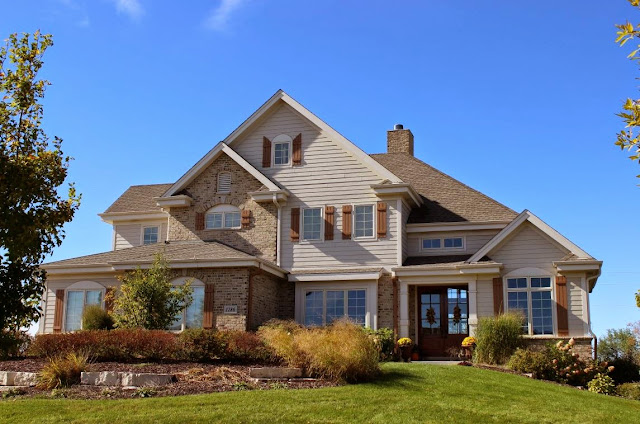

Contact me today for a free evaluation of your home and find out!
Lisa Bear
RE/MAX Realty Center
262-893-5555

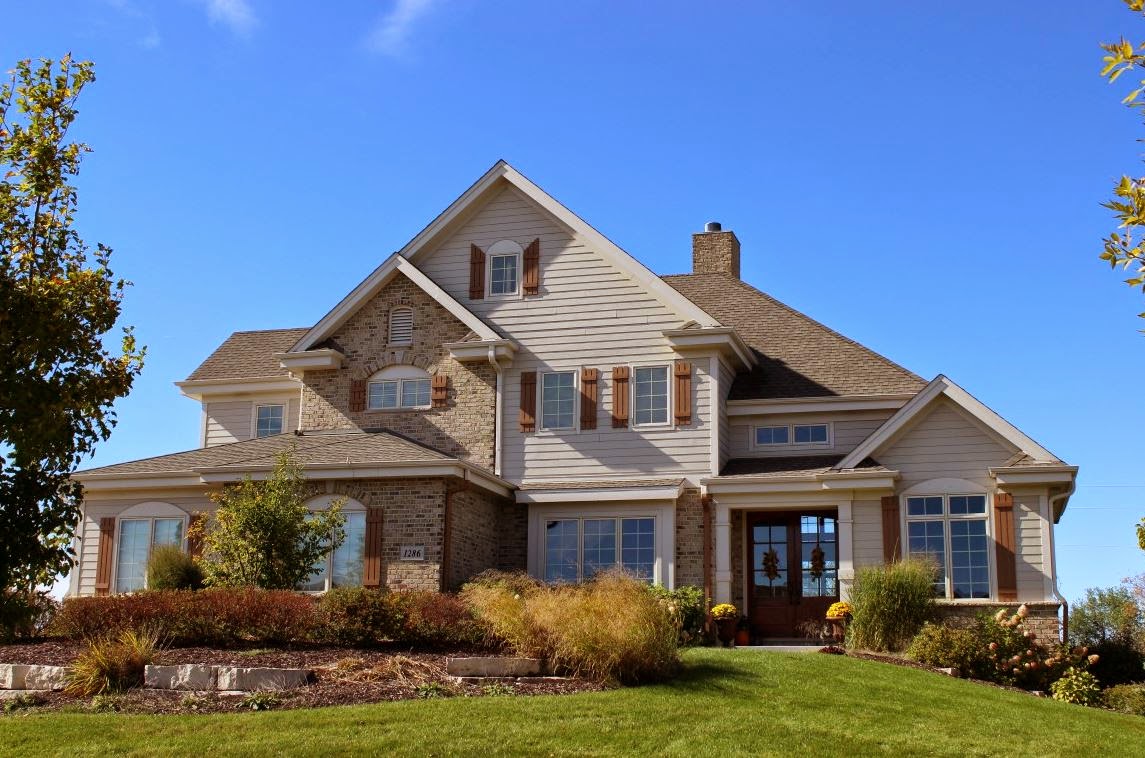

Contact me today for a free evaluation of your home and find out!
Lisa Bear
RE/MAX Realty Center
262-893-5555

Subscribe to:
Posts (Atom)